ASUS and XREAL kill the gaming monitor with 240Hz AR glasses
ASUS and XREAL unveil the ROG XREAL R1, the world's first 240Hz AR gaming glasses, turning handhelds into 171-inch virtual theaters.

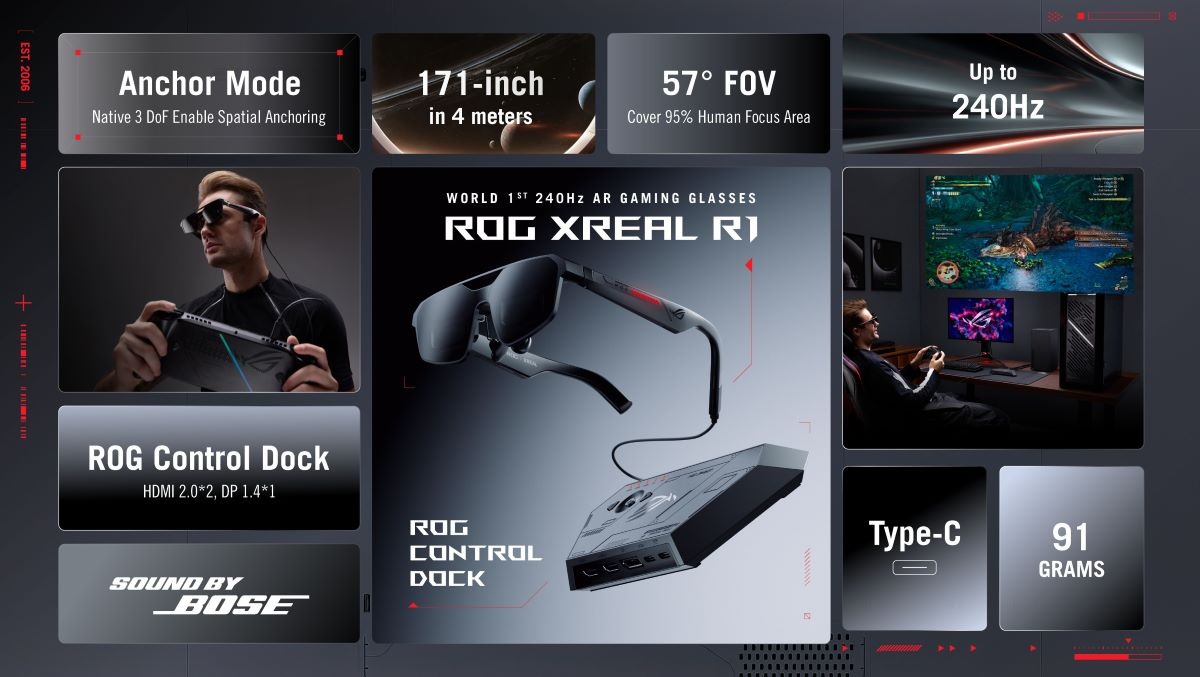
ROG XREAL R1 with ROG Control Dock
The gaming monitor is dead, and ASUS just put the nail in the coffin with a 91-gram wearable.
On January 6, ASUS Republic of Gamers (ROG) officially obliterated the concept of a "portable display" by unveiling the ROG XREAL R1, the world's first AR glasses featuring a blistering 240Hz refresh rate. In a surprise strategic alliance with market leader XREAL, ASUS isn't just releasing an accessory; it is attempting to monopolize the mobile gaming ecosystem by turning every ROG Ally handheld into a 171-inch cinematic rig.
The "Death of the Desk"
The specifications revealed at CES 2026 are a direct attack on traditional hardware constraints. The ROG XREAL R1 packs dual micro-OLED panels that project a massive Full HD virtual screen equivalent to 171 inches viewed from four meters away.
But the real disruption is the speed. While competitors like the Lenovo Legion Glasses cap out at 60Hz or 120Hz, the R1’s 240Hz refresh rate and 3ms motion-to-photon latency make it the first wearable viable for competitive esports.
| Feature | Specification |
| Display Panel | Sony 0.55-inch micro-OLED |
| Resolution | 1920 x 1080 (FHD) per eye |
| Refresh Rate | 240Hz |
| Field of View (FOV) | 57° |
| Peak Brightness | 700 nits |
| Color Gamut | 107% sRGB |
| Latency | 2ms Motion-to-Photon |
| Degrees of Freedom | Native 3 DoF (6 DoF Supported) |
| Lens Features | 3-level adjustable transparency, Digital IPD adjustment |
| Audio | Sound by Bose |
| Weight | 91g |
"Our goal has always been to make spatial computing feel natural, powerful, and wearable," said Chi Xu, CEO of XREAL, who framed the partnership as the bridge between niche AR and mass-market gaming.
The Ecosystem Moat
This is a calculated business move to lock users into the ASUS hardware garden. The glasses feature a proprietary "zero-setup" connection with the ROG Ally, allowing the handheld to power the headset directly via USB-C without the dongle hell that plagues other AR solutions.
For the broader market, ASUS introduced the ROG Control Dock, a hub that allows the R1 to connect to consoles and PCs via HDMI 2.0 and DisplayPort 1.4. By solving the connectivity friction that killed early AR attempts, ASUS is positioning the R1 not as a novelty, but as a mandatory peripheral for the travelling gamer.
The Financial Stakes
While official pricing remains undisclosed ahead of the H1 2026 launch, analysts expect the R1 to undercut Apple's Vision Pro by thousands, targeting the $500–$800 "premium accessory" sweet spot.
If successful, ASUS and XREAL could cannibalize the lucrative portable monitor market—a segment ASUS currently leads. It’s a classic innovator’s dilemma: destroy your own product line before a competitor does it for you. With the R1, ASUS has decided that the future of screens is that there are no screens at all.


