Anthropic Claude Opus 4.6 crushes GPT-5.2 in agentic benchmarks
Anthropic's Claude Opus 4.6 arrives with a $20k agentic price tag and a 53-point benchmark lead, signaling a brutal new phase in the AI wars.

- Opus 4.6 secures a 53-point Intelligence Index score, overtaking OpenAI’s GPT-5.2.
- New capabilities allow the model to execute $20,000 software engineering tasks autonomously
- Anthropic’s ad-free "Time and a Place" campaign sparks a public feud with Sam Altman.
The new Claude Opus 4.6 isn't just a smarter chatbot, it’s a $20,000 per project autonomous employee that just ended OpenAI’s dominance.
The most important number in AI this morning isn't a benchmark score. It’s the revenue doubling reported by PressVia, which confirms Anthropic has successfully pivoted from "safe" underdog to aggressive market leader. While Silicon Valley was distracted by Sam Altman’s ad-supported pivot for ChatGPT, Anthropic quietly built a model that doesn’t just chat, it works. Released Thursday, Claude Opus 4.6 didn't just inch past GPT-5.2; it established a new ceiling for agentic labor, scoring 53 points on the Artificial Analysis Intelligence Index compared to OpenAI’s 51.
For enterprise buyers, the implications are expensive but inevitable. Opus 4.6 is priced at a premium $5 per million input tokens, a figure that screams "high-value labor" rather than "customer service bot." In an internal stress test, Anthropic spent just under $20,000 to have a team of autonomous Opus agents build a functional C compiler from scratch. That’s not a software subscription; that’s the salary of a junior engineer, condensed into a few hours of compute.
"Claude Opus 4.6 is a huge leap for agentic planning," says Michele Catasta, VP of AI at Replit. "[It] breaks complex tasks into independent subtasks, runs tools and subagents in parallel, and identifies blockers with real precision."
The Benchmark Bloodbath
The technical delta is widening. While Google’s Gemini 3.0 Pro trails with 48 points, Opus 4.6 is posting "hard" capability scores that justify its price tag. It achieved 65.4% on Terminal-Bench 2.0, a critical measure of an AI's ability to use command-line interfaces like a human developer.
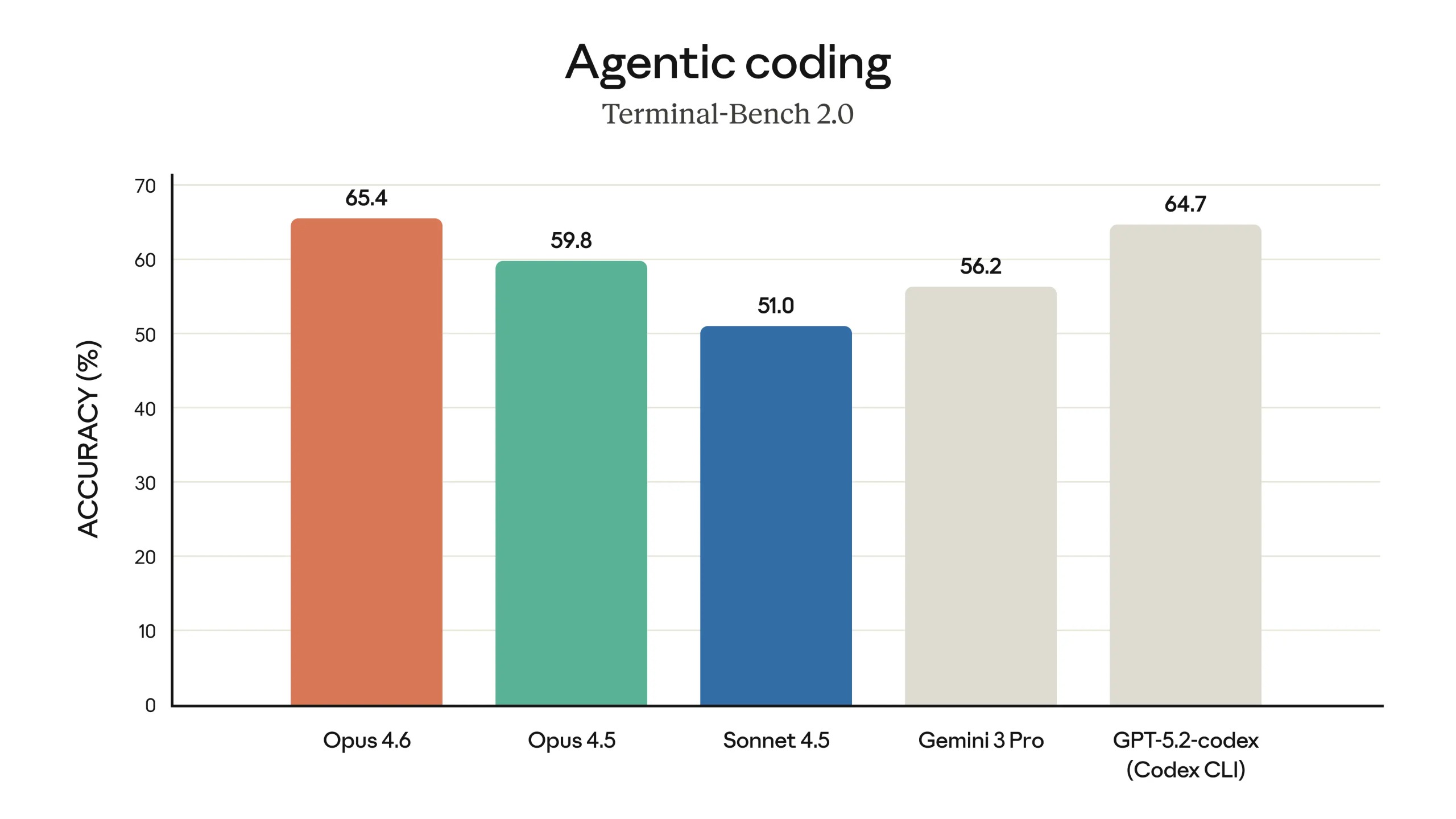
Opus 4.6 leads the pack in agentic coding and reasoning tasks.
This shift toward "Agentic AI" models that can browse, code, and execute workflows without constant hand-holding is the industry's new north star. "Opus 4.6 handled a multi-million-line codebase migration like a senior engineer," reports Graphite, an early access partner. "[It] finished in half the time."
The Ad War Escalates
The business story, however, is the open hostility breaking out between the labs. Anthropic’s release was accompanied by a scathing ad campaign titled "A Time and a Place," which mocks OpenAI’s decision to introduce ads into ChatGPT. The four-part comic series portrays ads intruding on intimate user moments, a direct shot at Altman’s strategy.
OpenAI CEO Sam Altman fired back on X, calling the campaign "clearly dishonest" and accusing Anthropic of engaging in "doublespeak." But the market is speaking louder than the tweets. By positioning Claude as the premium, ad-free "workhorse" for the Fortune 500, Anthropic is betting that businesses will pay a premium for privacy and competence, leaving the ad-supported tier to OpenAI.
With a 1 million token context window now in beta, Opus 4.6 is effectively a specialized brain you can rent by the hour. For investors, the message is clear: The era of the "chatbot" is over. The era of the digital employee has begun.
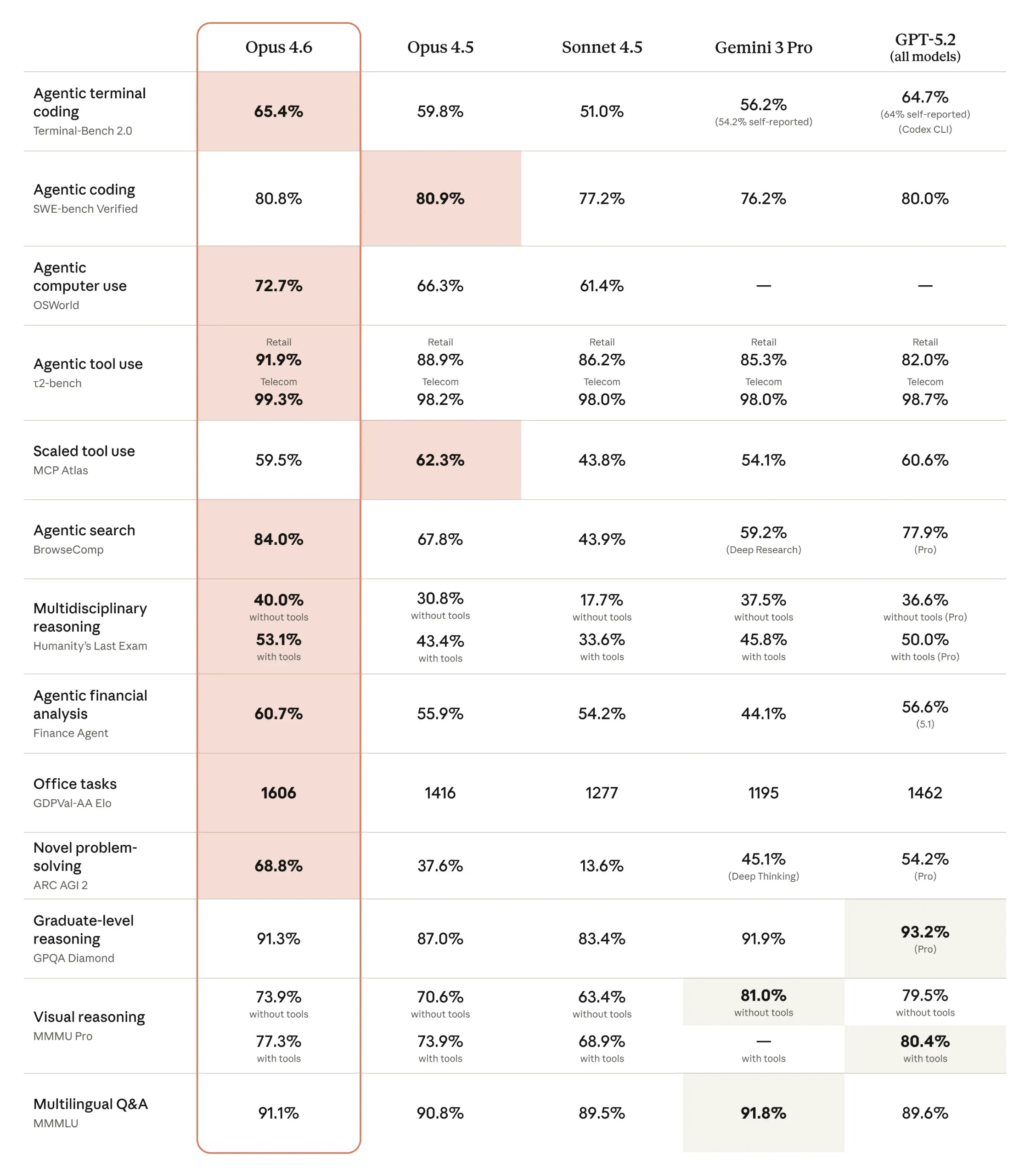
Claude Opus 4.6 compares to our previous models and to other industry models on a variety of benchmarks.


